

What if one of the most enjoyable spaces at your home is the one you usually walk past?
Side yards are easy to overlook. We give the front yard attention because everyone sees it. We plan the backyard around entertaining, relaxing, or spending time with our pets. Meanwhile, that stretch between the house and the property wall becomes a place for a hose, a few weeds, and things we intend to deal with later.
But a side yard can become something wonderful.
A colorful pot. A comfortable bench beside the gate. A few beautiful tiles left over from another project. A vine growing overhead and filtering the sunlight.
Those details can turn an ordinary passageway into a garden that feels personal, welcoming, and distinctly Tucson. You do not need a huge yard to create a beautiful outdoor experience. Sometimes, a smaller space makes every thoughtful touch more noticeable.
To create a beautiful Tucson side yard garden, combine a clear walkway with climate-appropriate plants, colorful containers, efficient drip irrigation, and a focal point such as a bench or custom gate. A trellis or ramada can support climbing plants and provide shade where its placement blocks direct sunlight. Start by observing your sun exposure, preserving drainage, and keeping access to gates and equipment clear.
Start With How You Want the Space to Feel
Before buying plants or choosing pavers, ask yourself a simple question: What would make me want to spend time here?
Perhaps you would enjoy a quiet place for morning coffee. Maybe you want a prettier view from your kitchen window. You might love the idea of walking through a leafy garden on your way to the backyard.
Give the space a purpose, even if that purpose is simply making you smile.
Then look at the practical details. Where does the gate swing? How do you reach the hose bib? Does the air-conditioning equipment need service access? Where does rainwater travel during a monsoon storm?
A successful side garden works with the way your home functions. Leave a comfortable, unobstructed route through the space, and build the beauty around it.
Create a Destination With a Bench Beside the Gate
A bench can completely change the way a side yard feels.
Without seating, a narrow garden may remain somewhere you pass through. Add a bench, and suddenly there is a reason to stop.
A built-in masonry bench beside the gate can look especially at home in Tucson. Matching the bench to the surrounding block or stucco helps the design feel connected to the property. A simple freestanding bench can also work beautifully if you want a smaller project or more flexibility.
Position the seat where it will receive useful shade during the hours you expect to enjoy it. Consider the view from the bench, too. Looking toward a flowering vine, a beautiful pot, or a piece of garden art makes the experience more inviting.
Add an outdoor cushion if you like, choosing fabric suited to sun exposure. Even a small seating area can become your favorite place to take a phone call, enjoy a cool morning, tie your shoes, or spend a few quiet minutes outside.
Turn Leftover Tile Into Garden Art
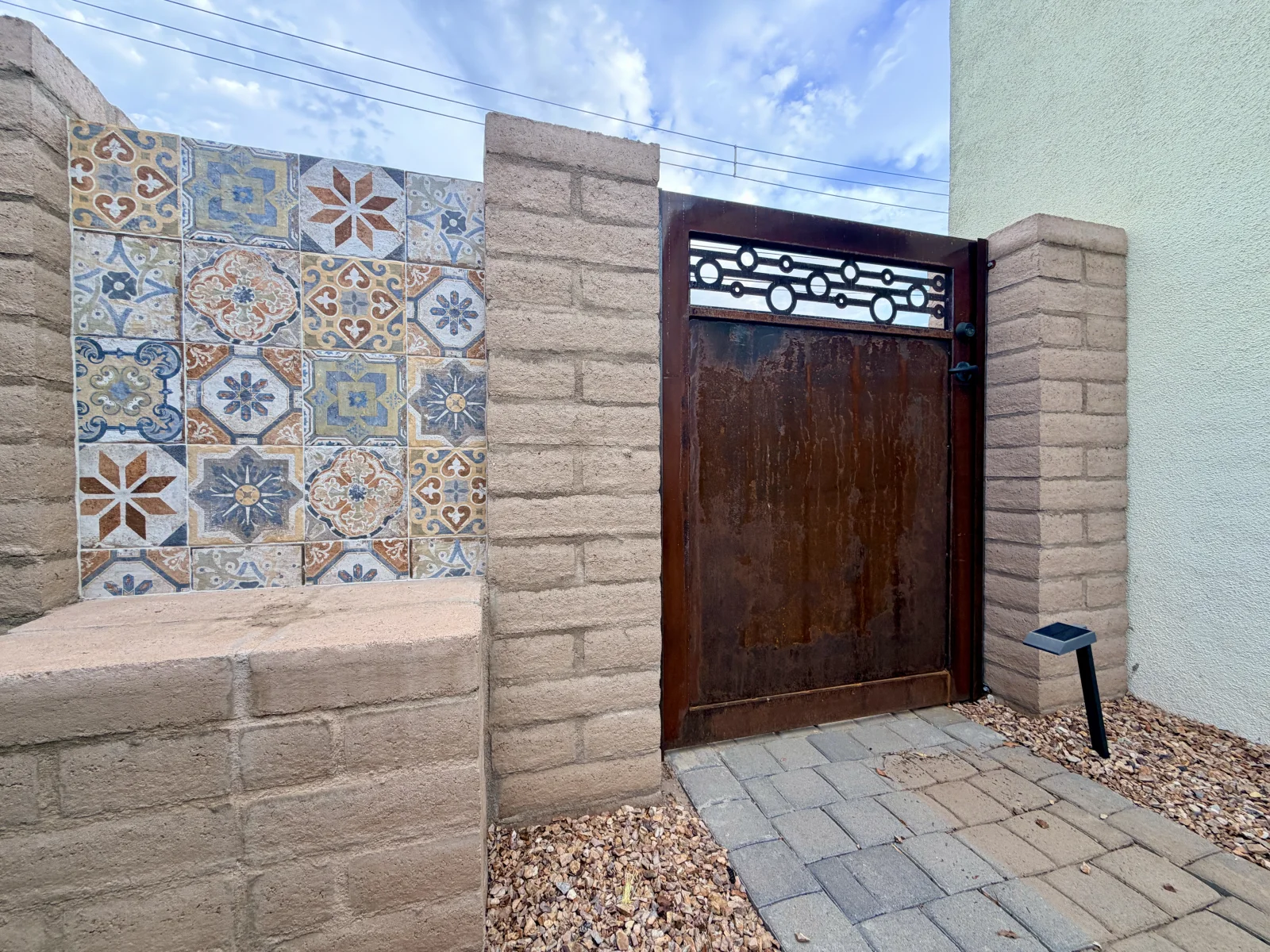
Have a few interesting tiles left over from a kitchen, bathroom, or patio project? Your side yard may be the perfect place to use them. As you can see in the photo, Tony Ray had the contractor use the leftover tile from a wall inside our home. The tile brings the inside and outside together and makes the home’s interior and exterior feel more cohesive.
A tile panel behind a bench can give a plain gate wall a focal point. Repeating a few colors from the tiles in nearby pots or cushions helps tie the space together.
The tiles do not all have to match. A thoughtful mix of patterns can bring warmth and personality to a simple masonry wall. Blues, earthy reds, soft yellows, and creamy whites can look beautiful alongside Tucson’s desert colors.
Keep the design intentional. You might frame a rectangular panel, create a narrow border, or highlight a small recessed area rather than covering an entire wall.
Choose tile and installation materials suitable for outdoor exposure, including temperature changes and occasional freezing conditions. A tile installer can help determine whether your leftover materials are appropriate.
This is a lovely way to give useful materials a second life while creating something that feels uniquely yours.
Make the Gate Part of the Garden
A gate can do much more than mark the way into the backyard.
Think of it as an architectural feature: something you see from the garden, from the house, and sometimes from the street.
A custom metal gate with a geometric pattern can complement a contemporary home. A simple rustic design can bring warmth to adobe-inspired architecture. A locally made artistic gate can become the centerpiece of the entire space.
The gate in these photos shows how effective that approach can be. Tony Ray designed this gate and front door to match. Our metal guy is amazing, and we are happy to introduce you to him. Its rich metal tones and circular details complement the masonry and patterned tile nearby. Each element contributes to the overall composition.
Consider privacy along with appearance. A solid lower panel can provide screening, while an open upper section introduces a decorative detail.
Before choosing a design, think about the opening you need for moving equipment, maintaining the property, and reaching the backyard. A beautiful gate should also be easy to use.
Use Potted Plants to Bring Color Into a Narrow Space
Containers are one of the most flexible ways to create a Tucson side garden.
They introduce color at ground level, lift plants into view, and let you garden where an in-ground planting bed may be impractical.
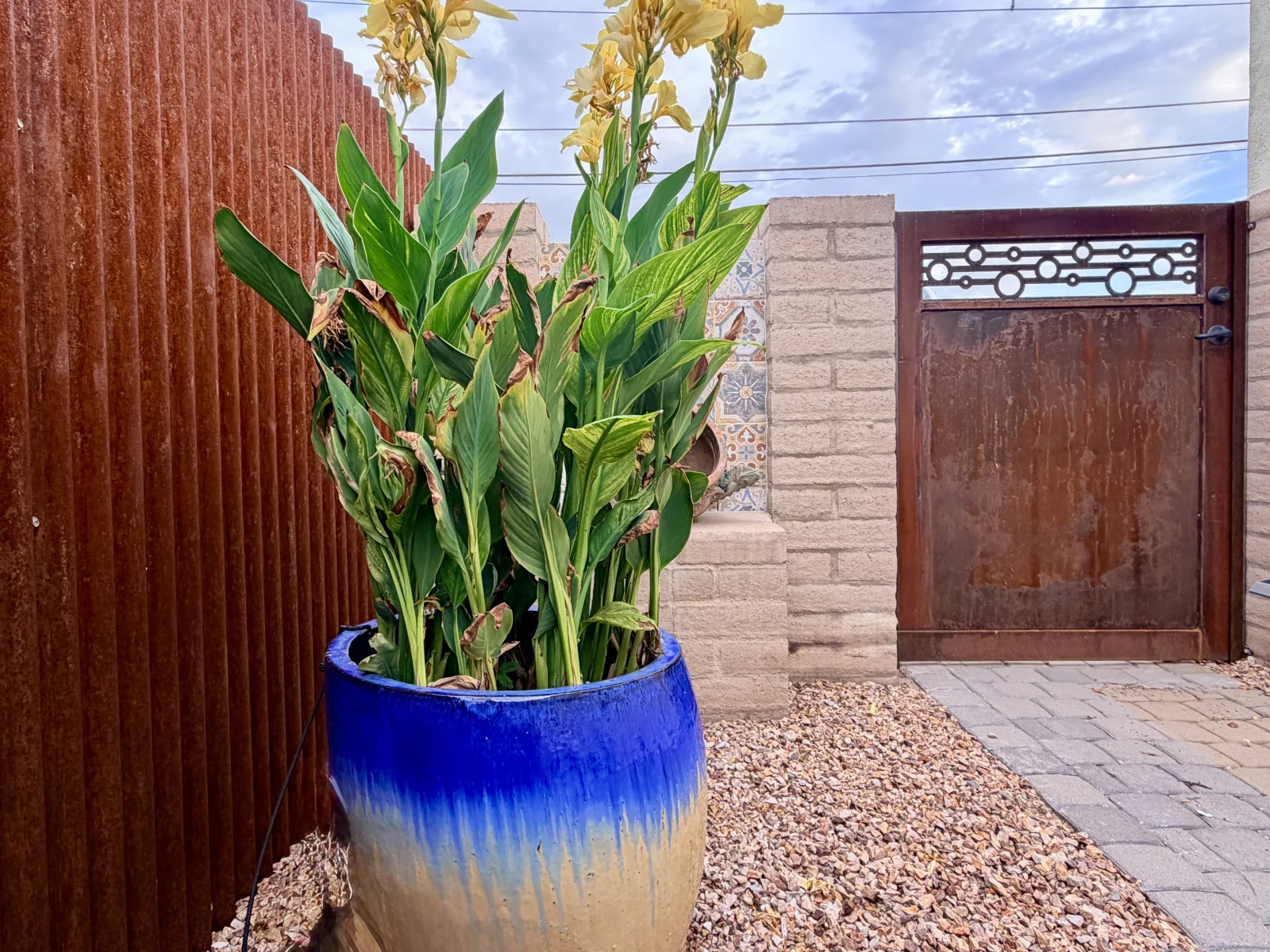
I chose blue pots because I love the way they look with the hand-rusted metal fence. A large cobalt-blue pot can make an immediate statement against warm masonry or a rust-colored fence. A cluster of containers in related colors can create a softer, layered look.
Vary the heights, but leave room for plants to reach their mature size. A few well-placed containers often look more inviting than a crowded collection that makes the walkway difficult to navigate.
Container size matters in our climate. University of Arizona Cooperative Extension explains that smaller containers dry out faster and experience greater temperature fluctuations. Larger pots can provide a more stable root environment, provided they have adequate drainage and an appropriate growing medium.
Select plants for the actual conditions beside your house. A sheltered location with morning light is very different from a narrow corridor receiving intense afternoon sun and reflected heat.
Add Automatic Watering to Make the Garden Easier to Maintain
A beautiful container garden should fit your routine.
Running drip irrigation to your pots can make maintenance more manageable, especially during hot weather or when you travel. Small irrigation lines can be routed discreetly so the plants remain the focus.
A properly designed system needs more than a timer. Filtration, suitable pressure regulation, appropriate emitters, and backflow protection all deserve attention.
It also helps to group plants by their watering needs. Containers and established plants in the ground may need different schedules, so putting everything on one timer setting can create problems.
University of Arizona Cooperative Extension identifies drip irrigation as a useful option for potted plants and narrow landscape areas. Its guidance also emphasizes changing schedules with the weather and seasons and inspecting lines and emitters regularly.
Automatic watering makes the work easier, but keep checking your garden. A disconnected line or clogged emitter is much easier to address when you notice it early.
Grow Upward With a Trellis, Arbor, or Ramada
When the ground space is limited, look up.
A trellis can soften a wall without taking up the footprint of a large shrub. An arbor can frame the entrance to the garden. A ramada or pergola can give the space an outdoor-room feeling and provide support for climbing plants.
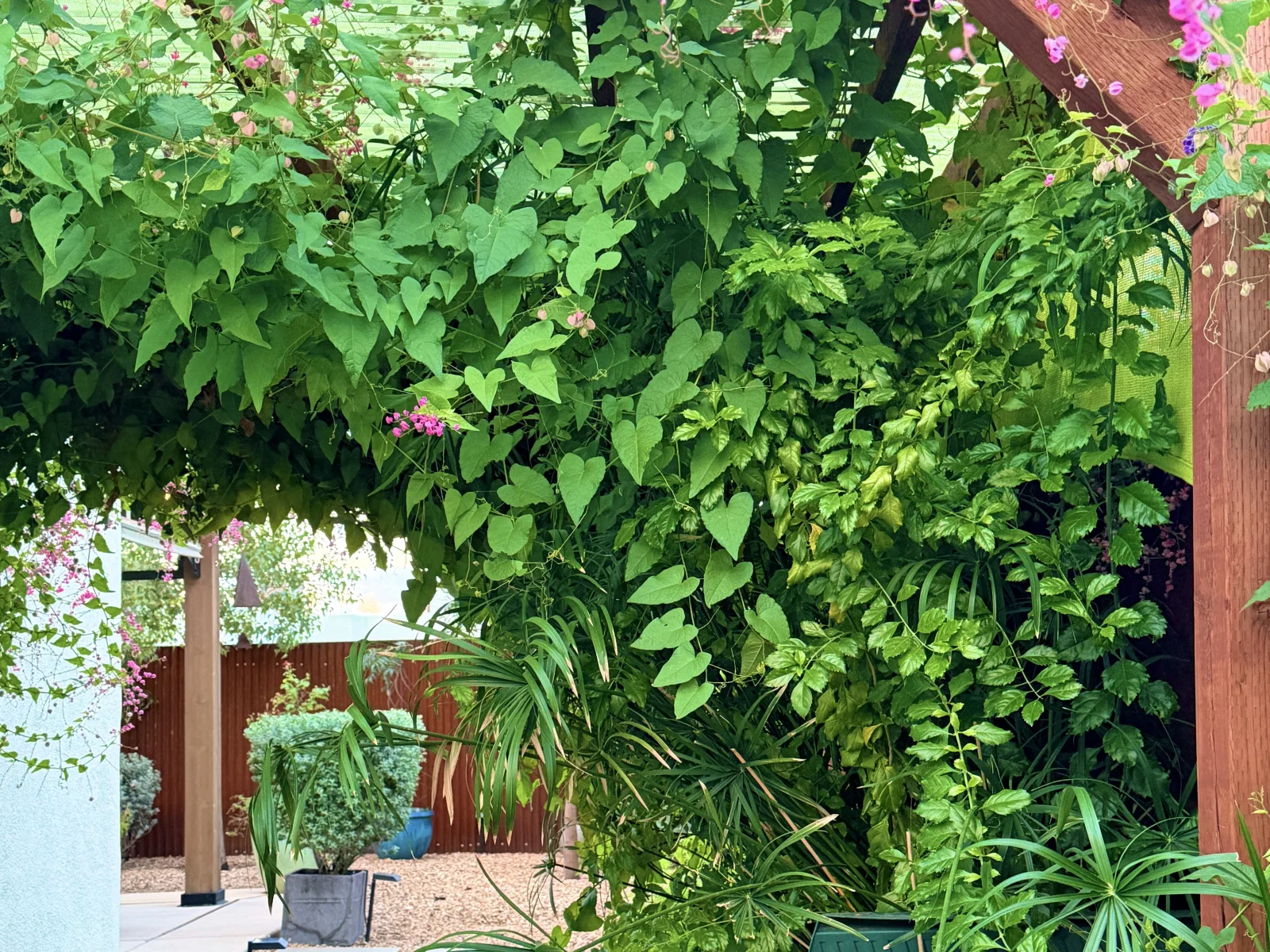
The side-garden photo illustrates the appeal beautifully: greenery overhead, flowers adding color, and a clear path continuing beneath the structure.
Choose the support and the plant together. Consider the vine’s mature size, weight, climbing habit, pruning needs, and seasonal appearance. A delicate decorative trellis may be unsuitable for a heavy, vigorous vine.
Ask a knowledgeable local nursery to help you select a plant for your particular exposure. Bring photos of the space and explain whether you want flowers, privacy, seasonal shade, or year-round foliage.
For easier maintenance, consider a separate support that allows you to manage growth without letting vines spread directly over the house.
Use Shade to Improve Comfort Beside the House
Shade is one of the most useful things a Tucson side garden can provide.
A well-positioned structure or planting can shade a sitting area, part of a walkway, or an exposed section of the house. Depending on placement, it may also help reduce direct sunlight reaching a wall or window.
University of Arizona Cooperative Extension notes that vines can shade outdoor living spaces and help reduce sun glare and reflected heat. Vines positioned beside walls or windows can also contribute to cooler conditions inside.
The key is placement. Watch where the sun falls at different times of day before deciding where to build or plant. Overhead shade alone may not block low afternoon sunlight coming in from the side.
Keep access, airflow, and maintenance in mind as the garden matures. Plan enough room around equipment and building surfaces so that the space remains practical.
Give the Walkway as Much Attention as the Plants
A clear path helps a narrow garden feel organized.
Pavers, brick, or another suitable walking surface can guide the eye toward a bench, a gate, or a beautiful container. Repeating shapes can bring a sense of rhythm to a long, narrow space.
Think about how you will actually use the path. Widely spaced stepping stones may be attractive, but a more continuous surface may be easier for everyday walking, rolling a cart, or accommodating mobility needs.
Choose stable materials and keep transitions even. Arrange irrigation tubing so it does not cross the walking route.
Pay attention to drainage, too. Preserve the routes that carry stormwater safely through the property. Avoid creating a low spot beside the house or blocking an existing drainage opening with pots, edging, or a new planting bed.
Design the View From Inside Your Home
One of the best reasons to improve a side yard may be the view through a window.
Stand inside your kitchen, bedroom, or hallway and look out. What do you see? One of my windows looks out at the pink flowering vine covering the ramada. I built it to create a view from inside that room. The ramada is perfectly centered to that window. Another one of the windows looks out at a frog sculpture made by a local Tucson artist. The frog is in a meditating Zen yoga pose, and I placed flowers on each side of it. Every time I look out that window, it makes me smile.
A carefully positioned pot, a flowering trellis, or a piece of outdoor art can turn a bare-wall view into something you enjoy every day.
You may not need to landscape the entire side yard to make that difference. Sometimes, concentrating on the area visible through one window creates the most satisfying improvement.
This is also a good place to practice restraint. One beautiful focal point can have more impact than several competing decorations.
Keep the Garden Manageable
The best side garden is one you will enjoy caring for.
Choose plants with mature sizes that fit the space. Think about fallen leaves, flowers, thorns, pruning, and how easily you can reach each container.
A lush garden can be lovely, but the photos are design inspiration rather than a planting recipe for every Tucson home. Your sun exposure, water budget, and maintenance preferences should guide the final choices.
Before adding permanent structures, confirm any applicable property restrictions, easements, HOA requirements, or local approvals. Checking those details early helps you plan a project that fits your property.
You can also build the garden in stages:
- Clear the space and establish a comfortable path.
- Add one focal point, such as a bench or colorful pot.
- Plan irrigation before expanding the planting.
- Introduce shade and vertical greenery where they will be most useful.
- Finish with tile, art, or other personal details.
See More Possibility in the Home You Have
One thing I encourage homeowners and buyers to do is look beyond how a space is being used today.
A narrow side yard may look ordinary at first. Then you picture a bench beside the gate, a colorful tile panel, a few beautiful pots, and greenery overhead.
Suddenly, you can see another way to enjoy the home.
That is what thoughtful design can do. It helps you discover possibilities in places you might otherwise overlook.
You do not have to complete everything at once. Start with one improvement that makes the space more useful or more inviting, and let the garden grow from there.
Frequently Asked Questions About Tucson Side Yard Gardens
How can I turn a narrow side yard into a beautiful garden?
Start with a clear, comfortable walkway and add features that fit around it. A colorful pot, a bench beside the gate, decorative tile, or a trellis can give the space personality. In a narrow Tucson side yard, growing upward helps you introduce greenery while preserving room to walk.
What is the easiest way to start a side yard garden on a budget?
Choose one area to improve first. Clear away clutter, tidy the walkway, and add a focal point such as a large container or a simple bench. Leftover outdoor-rated tile can become a decorative panel near the gate. Expand gradually, planning irrigation before adding more plants.
What plants should I choose for a Tucson side garden?
Choose plants for the conditions in your particular space. Notice how much direct sun the area receives, whether nearby walls reflect heat, and how much room plants will have when mature. Bring photos and information about your sun exposure to a local nursery for help selecting suitable plants.
Can I create a side yard garden using only potted plants?
Yes. Containers let you introduce greenery where planting in the ground may be impractical. Choose pots with adequate drainage and enough room for mature roots. Larger containers generally dry out more slowly and experience fewer temperature fluctuations than smaller pots. Match the plants to the available sunlight and your watering routine.
Is automatic drip irrigation a good option for potted plants?
Yes. A properly designed drip system can make container watering easier to manage. Potted plants may need a different watering schedule from established plants in the ground. Adjust watering as conditions change, and regularly check for clogged emitters, leaks, or disconnected tubing.
Can a trellis or ramada help shade the side of my house?
Yes, when positioned to block direct sunlight. A trellis with climbing plants can shade a wall or window, while a ramada can shade a walkway or seating area. Observe the sun before choosing a location, especially during the afternoon. The amount of shade depends on the structure, plant coverage, season, and sun angle.
How can I make a side yard feel like a small courtyard?
Create a destination within the space. A bench against a tiled wall, a distinctive gate, and a few coordinated containers can give a narrow area a courtyard feeling. Repeat colors or materials to connect the features, and leave enough open space for the garden to feel comfortable.
Can I use leftover tile outside?
Some leftover tile can work beautifully as an outdoor wall accent or bench backdrop. Confirm that the tile, adhesive, grout, and installation method are suitable for the exposure. Tile intended for indoor use may not perform well outdoors. Walking surfaces also need materials appropriate for foot traffic and wet conditions.
How do I keep a Tucson side garden manageable?
Choose plants whose mature size fits the space, and consider their pruning needs, thorns, and seasonal cleanup. Keep containers accessible for maintenance and irrigation checks. A few thoughtfully placed plants can create a beautiful garden without filling every available spot.
What should I check before adding a bench, trellis, or ramada?
Confirm that the design preserves gate access, drainage, and access to utilities and equipment. Check applicable easements, HOA requirements, and local approval requirements before installing permanent features. Plan for the size and weight of mature climbing plants when selecting their support.
Is improving a side yard worthwhile if I may sell my home?
A tidy, thoughtfully arranged side yard can help buyers understand how the outdoor space could be enjoyed. Focus first on maintenance, clear access, healthy plants, and a cohesive appearance. Before investing in a larger project, talk with your real estate consultant about which improvements make sense for your home and selling plans.
If you would like help, call me. I love gardening.
And if you are considering a move, Tony Ray and I are happy to help you look at outdoor spaces with fresh eyes. Sometimes, the little garden you have been hoping for is waiting in a side yard you almost walked past.
Darren Jones | RE/MAX Fine Properties