

The Acme Conspiracy: Why Tucson is the Secret Birthplace of Looney Tunes
Growing up in Tucson, Arizona, does things to a kid’s imagination. You aren’t just surrounded by dirt and saguaros; you are surrounded by a landscape that looks suspiciously like a Sunday morning broadcast.
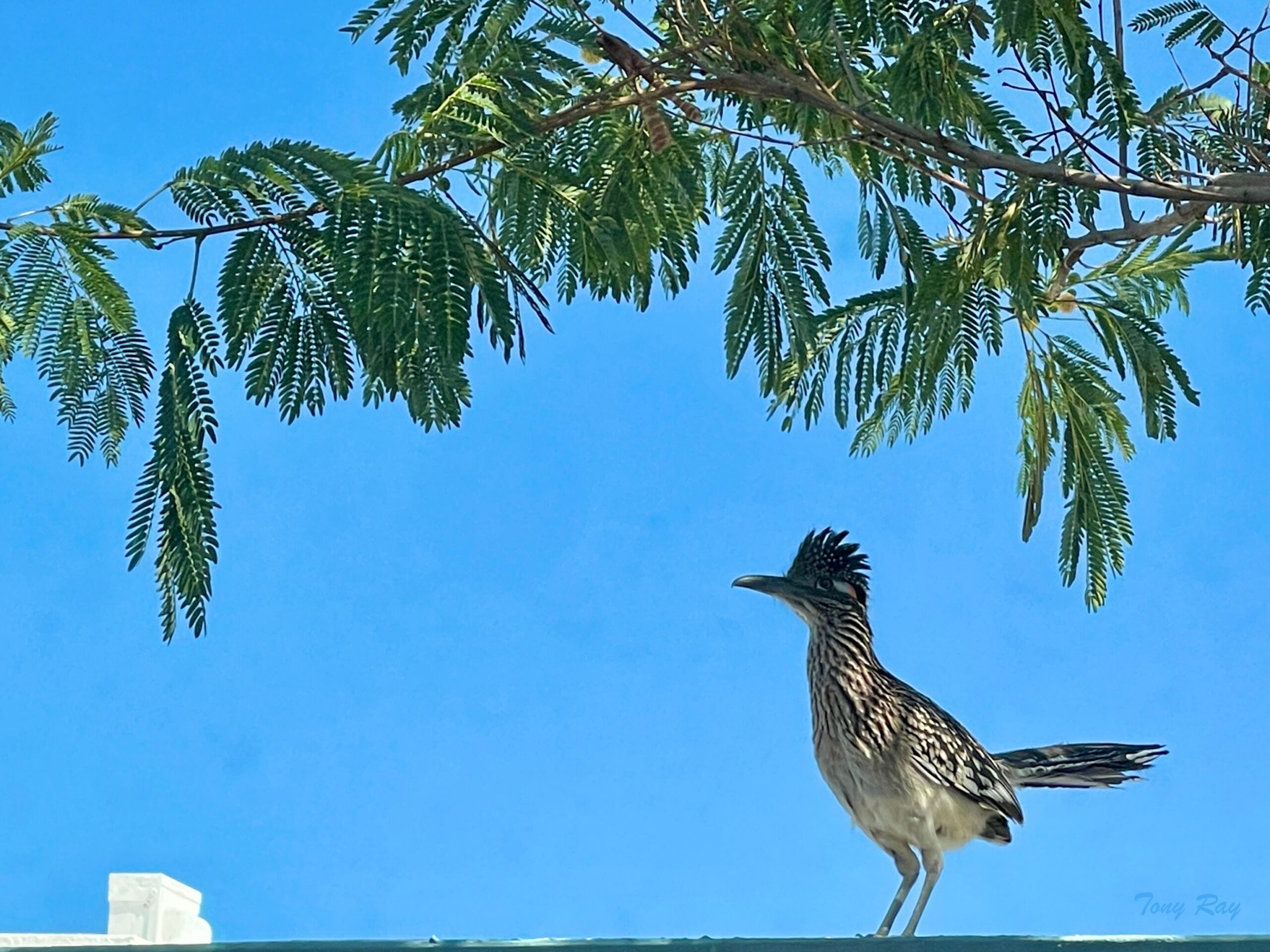
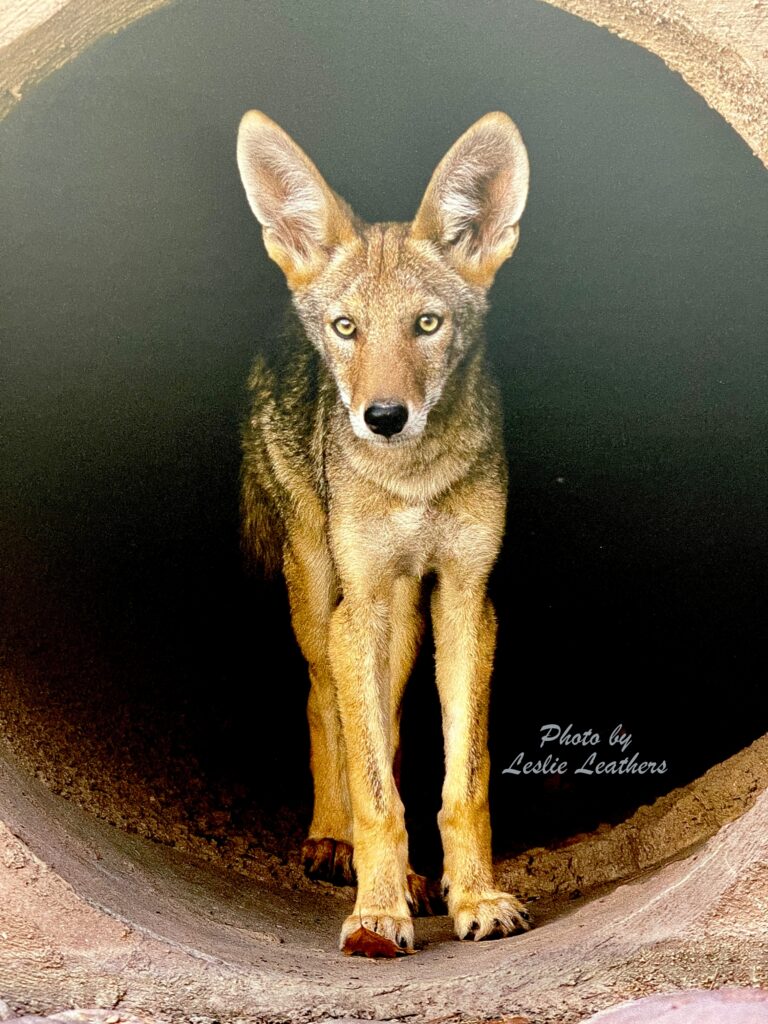
On my desk right now, is a photo I took of a roadrunner. Across from me is an amazing photo of a coyote, taken by Leslie Leathers. These photos prompted this realization. The roadrunner, looks sleek, smug, and entirely too fast. The coyote, looks slightly disheveled and deeply exhausted by life. Looking at them, I am transported right back to my childhood, staring up at the Tucson mountains with a theory that I am still not entirely convinced is wrong.
As a kid, my dad (Jerry Baker) would take me to “A” Mountain to hike and I had a rock-solid, completely unshakeable theory: Chuck Jones and Michael Maltese, the brilliant minds who created the Road Runner and Wile E. Coyote characters back in 1948, didn’t just invent them in a sterile Hollywood studio. No, they must have taken a road trip to Tucson, looked around, and realized they didn’t even need to write a script. The desert had already done the work for them.
The Evidence on the Mountainside
If you’ve ever spent time looking at our local peaks, you know they are practically crawling with wildlife. A particular mountain known as “A” Mountain (aka Sentinel Peak) is flanked by Tumamoc Hill and another hill, both known for hiking. This area always seemed to be the epicenter of the action, especially during certain times of the year.
In the cartoon, the geography is a character of its own, featuring jagged cliffs, precarious boulders, and sudden drops. West Tucson is exactly that, just with a lot more saguaros. Every time I see a real roadrunner zip across a wash, or a coyote dart behind a saguaro, I don’t see “nature.” I see a live-action rehearsal. I half-expected to find a giant wooden crate labeled ACME sitting at the base of the Tucson Mountain foothills, or a tunnel painted onto the side of a solid rock wall.
Over the past few years, I actually got to speak up about this during some of our Tucson Trolley Tours. When the trolley would pass these exact areas, I would always point out the window and tell guests to keep their eyes peeled. Tourists would think I was just being entertaining, even laughing at me, but locals knew the truth: we were driving through a living, breathing storyboard.
THE TUCSON TRUTHER CHECKLIST
✔️ Jagged Brown Cliffs? .. Yes (Tumamoc, “A” Mountain & the Tucson Mountains)
✔️ Fast Roadrunners? …. Yes (Many in the Menlo Park / “A” Mountain area)
✔️ Suspicious Crater? …. Oh, absolutely. (You can see it from Grande Ave as you drive by “A” Mountain)
The Ultimate Smoking Gun: The Spaceship Crash Site
But the roadrunner and coyote dynamic was only Phase One of my childhood conspiracy theory. The real crown jewel of my investigation was the crater on the side of “A” Mountain.
Normal people look at it and see geological history. I looked at it and saw a cosmic crime scene.
Around the same time Chuck Jones was animating our favorite desert chase, he was also bringing Marvin the Martian to life. Coincidence? I think not. To my kid brain, that crater wasn’t caused by nature. It was, without a doubt, a crash site. Clearly, Marvin had botched a landing in his flying saucer, slammed into the mountain, and Chuck Jones had been there with a sketchbook to record the aftermath. It made perfect sense.
As it turns out, the true story of that crater doesn’t involve just one Martian, it also involves some incredibly tough historical figures: nineteenth-century nuns.
The “crater” is actually an old historic stone quarry active from the late 1800s into the 1930s. Back in 1880, the Sisters of St. Joseph of Carondelet arrived in Tucson to build St. Mary’s Hospital right at the base of the mountain. Those pioneering nuns quite literally worked the desert landscape, clearing brush and gathering the dark volcanic basalt rock blasted from that quarry to help lay the literal foundations for early West Tucson health and education. That same volcanic rock (locally called malapai) went on to build the foundations of the Menlo Park neighborhood and the iconic rock wall surrounding the University of Arizona campus.
The Intergalactic Cover-Up
Now, as an adult, I respect the history. But as a certified Tucson Truther, I have to look at the facts.
If you were a group of stranded aliens trying to blend into a pioneering 1880s Arizona territory town while secretly clearing the debris from your crashed spaceship… masquerading as a group of hardworking, head-to-toe-covered nuns is the perfect cover! “Oh, don’t mind us, we’re just hauling these heavy volcanic basalt rocks away from the crash site to (air quotes) build a hospital. Classic Martian misdirection. The uniform works perfectly. I’m just saying, if a historic photo ever surfaces of a sister holding an Illudium Q-36 Explosive Space Modulator, I am going to feel completely vindicated.
The Legacy Continues
Looking at my roadrunner photo today, I’m reminded that while the cartoons might have been animated on celluloid, the spirit of them is entirely local. The real roadrunners of Tucson still have that chaotic energy, sprinting across traffic like they have somewhere incredibly important to be, and the coyotes still look like they’re plotting something that will ultimately backfire.
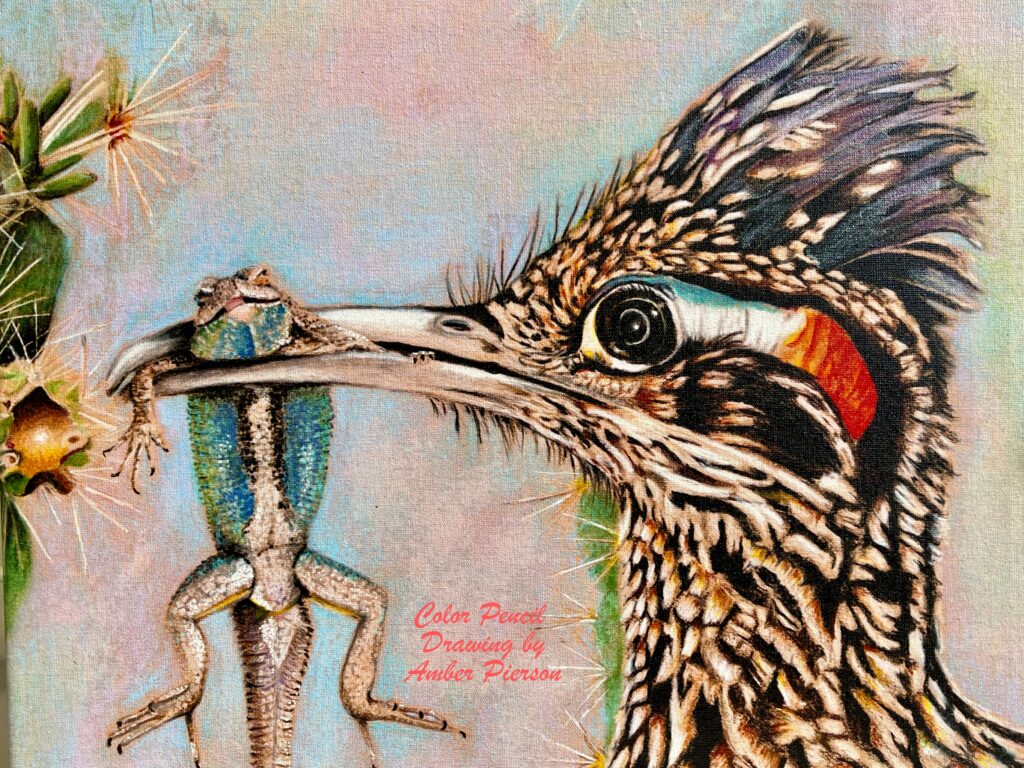
If you want to bring a piece of this classic desert dynamic into your own home, you can find some amazing art and photography right here at a local art gallery. The Tucson Gallery actually has stunning coyote and Tucson landscape photos as well as some beautiful roadrunner paintings available right now. They perfectly capture that split-second magic of our local wildlife and the magic of our desert.
Chuck Jones and Michael Maltese might have officially birthed these characters in 1948, but I like to think Tucson gave them their soul. So, the next time you join us on a trolley tour, or just find yourself driving past the old quarry on Sentinel Peak, keep your eyes peeled. Whether you’re looking for fast birds, hungry coyotes, or Martians in disguise, the evidence is all around us.
More Evidence:
If you look at the photos of Marvin Martian in space using the telescope to plot his path to Earth, you will see the coordinates align perfectly with “A” Mountain in Tucson AZ.
Just Sayin.
Google Marvin Martian Telescope and Google Illudium Q-36 Explosive Space Modulator
Frequently Asked Questions About Tucson’s Wild History
What is the crater on ‘A’ Mountain in Tucson? The distinct crater on the side of Sentinel Peak (“A” Mountain) is a historic stone quarry active from the late 19th century through the 1930s. Workers excavated dark volcanic basalt rock, locally known as malapai, which was used to construct historic foundations in the Menlo Park neighborhood and the rock wall around the University of Arizona campus.
Did Looney Tunes creators visit Tucson, Arizona? Chuck Jones and Michael Maltese officially debuted the Road Runner and Wile E. Coyote in 1948 using inspiration from the broader American Southwest desert, however there is no information as to whether they visited Tucson, Arizona, or not. Tucson’s unique geography, specifically Sentinel Peak and Tumamoc Hill, mirrors the iconic, jagged landscape depicted in the classic animations. This blog was created for fun, exploring the what-if scenarios from a child’s imagination.
Where can I see local roadrunner and coyote artwork in Tucson? Original roadrunner paintings and coyote photography celebrating local desert wildlife are available for viewing and purchase at The Tucson Gallery, located in the heart of downtown Tucson.
What is the historical connection between St. Mary’s Hospital and ‘A’ Mountain? In 1880, the Sisters of St. Joseph of Carondelet established St. Mary’s Hospital at the base of Tumamoc Hill. The pioneering nuns actively worked the surrounding desert landscape, collecting and utilizing the volcanic basalt rock blasted from the nearby Sentinel Peak quarry to construct the foundations of early West Tucson’s health and educational buildings.

Tony Ray Baker
Latest posts by Tony Ray Baker (see all)
- The Acme Conspiracy: Why Tucson is the Secret Birthplace of Looney Tunes - July 16, 2026
- The Elite Tucson Transition: A White Glove Relocation Experience - January 13, 2026
- 10 Reasons to Move to Tucson, AZ in 2026 | Fiduciary Relocation Guide - January 6, 2026
Tony Ray Baker, ABR, CRS, GRI, EcoBroker, NARgreen
(520) 631-TONY (8669)
TonyRay@SeeTucsonHomes.com
Full Time REALTOR® Helping Buyers and Sellers with Residential Real Estate in AZ Since 1994
Tierra Antigua Realty- 216 E Congress Street Tucson, AZ 85701
Equal Housing Opportunity